These are a more detailed sample of some of my projects that I have developed over the years.
If
you're curious about the most up-to-date status of these projects, feel free to visit my GitHub page at the
footer.
Each project will also include a link to its GitHub repository accessible by clicking on
its title, and may include a few screenshots or samples.
Here's a sample of some of the types of programs and projects I've developed:
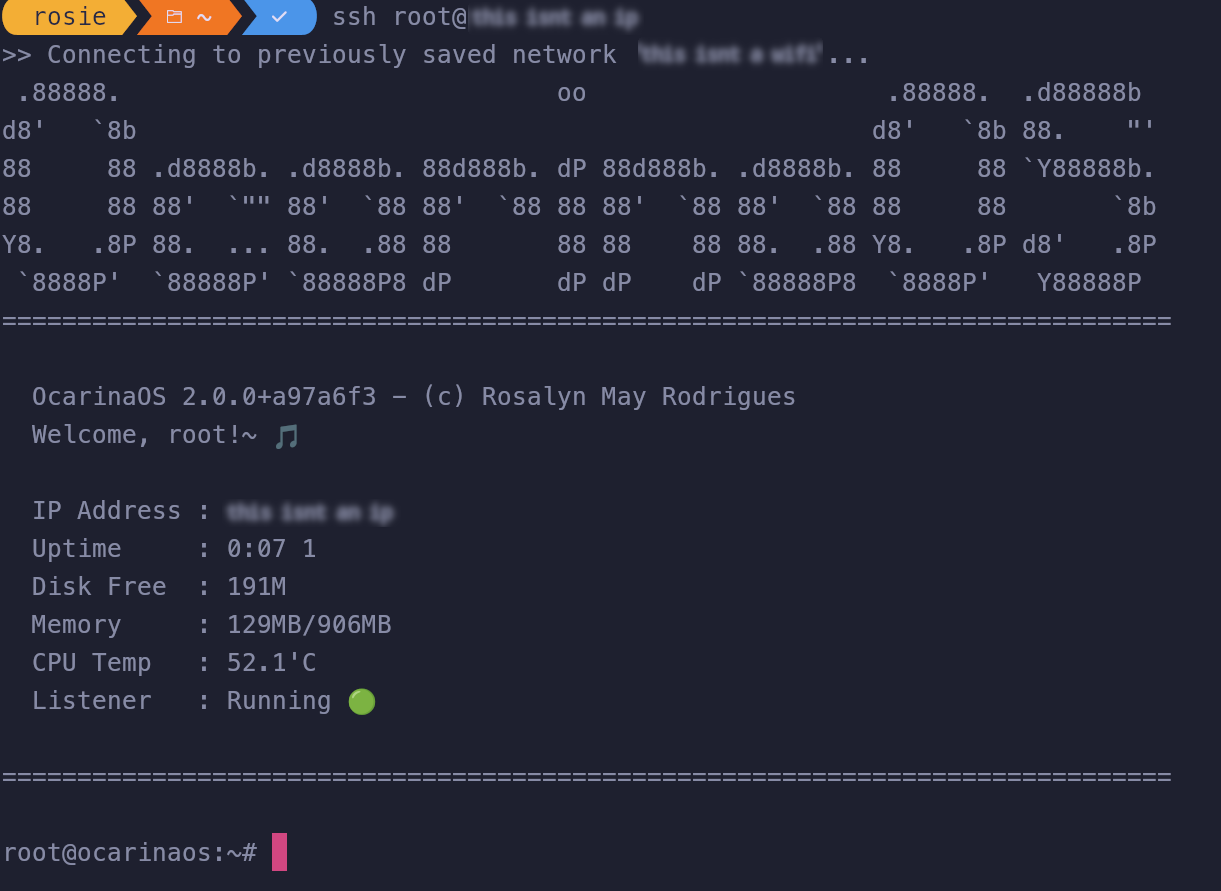
OcarinaOS, or Ocarina Listener, is an embedded project where you can play any monophonic instrument,
like a recorder or an ocarina, and have your song recognized as a valid magic spell, similarly to The
Legend of Zelda: Ocarina of Time.
The project spans custom circuitry, a custom embedded Rust
program, and a custom Yocto Project operating system, hence the name OcarinaOS. It is one of my favorite
side projects.
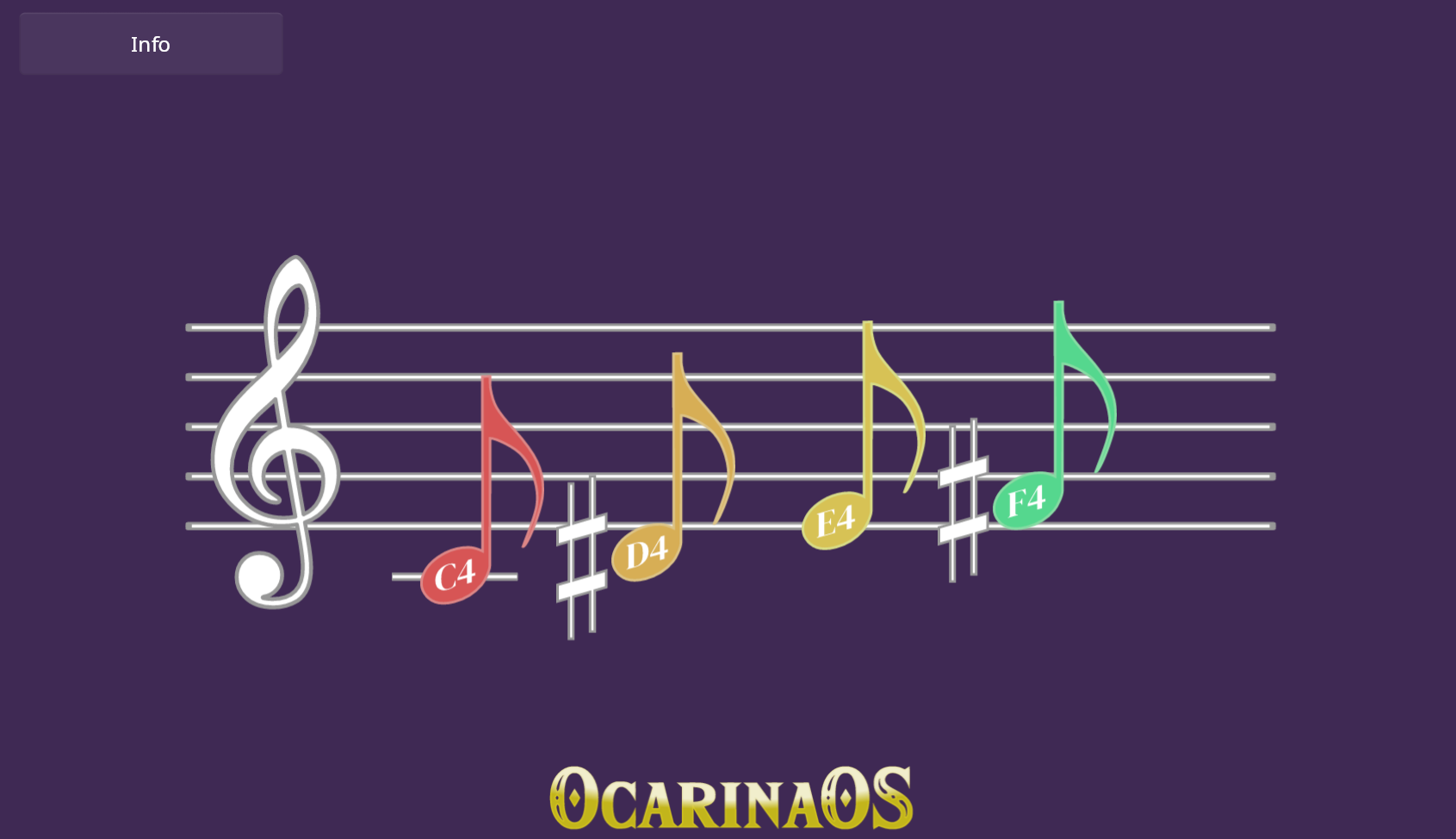
The Ocarina Listener component listens to microphone input and converts raw
waveform data into played notes using the McLeod Pitch Method, an algorithm built specifically for
monophonic instruments and human voices. The Ocarina GUI, built with Rust and Slint, displays the last
played notes, the recognized song, and system info, and communicates with the Listener over Unix
sockets.
For more in-depth info, check out the project's wiki.
The project runs on a Raspberry Pi 3B+ with a PiUART for serial communication, an Adafruit I2S MEMS
microphone breakout to capture sound, and a Waveshare 7-inch HDMI LCD with capacitive touch and 8Ω
speakers for the display and audio output.
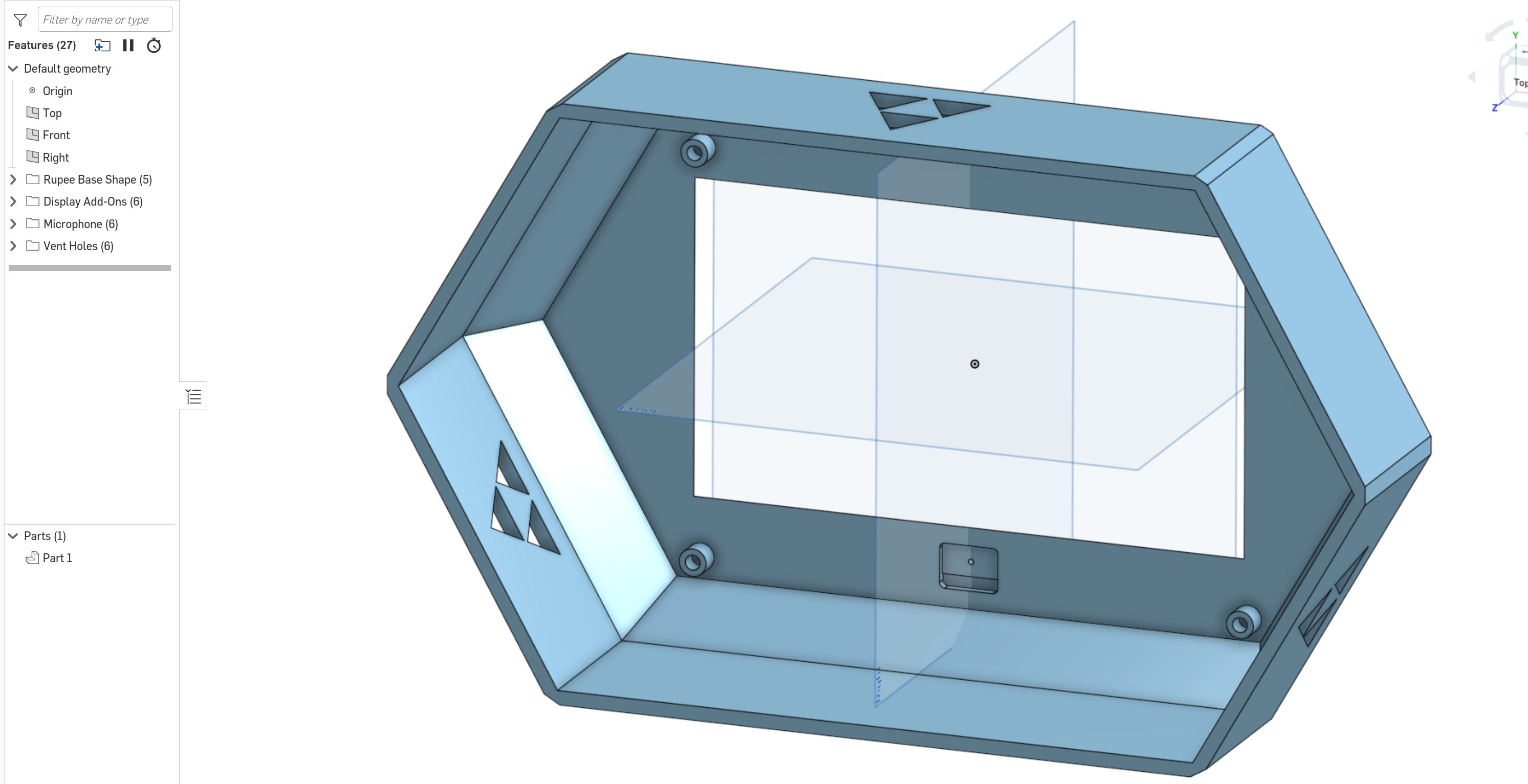
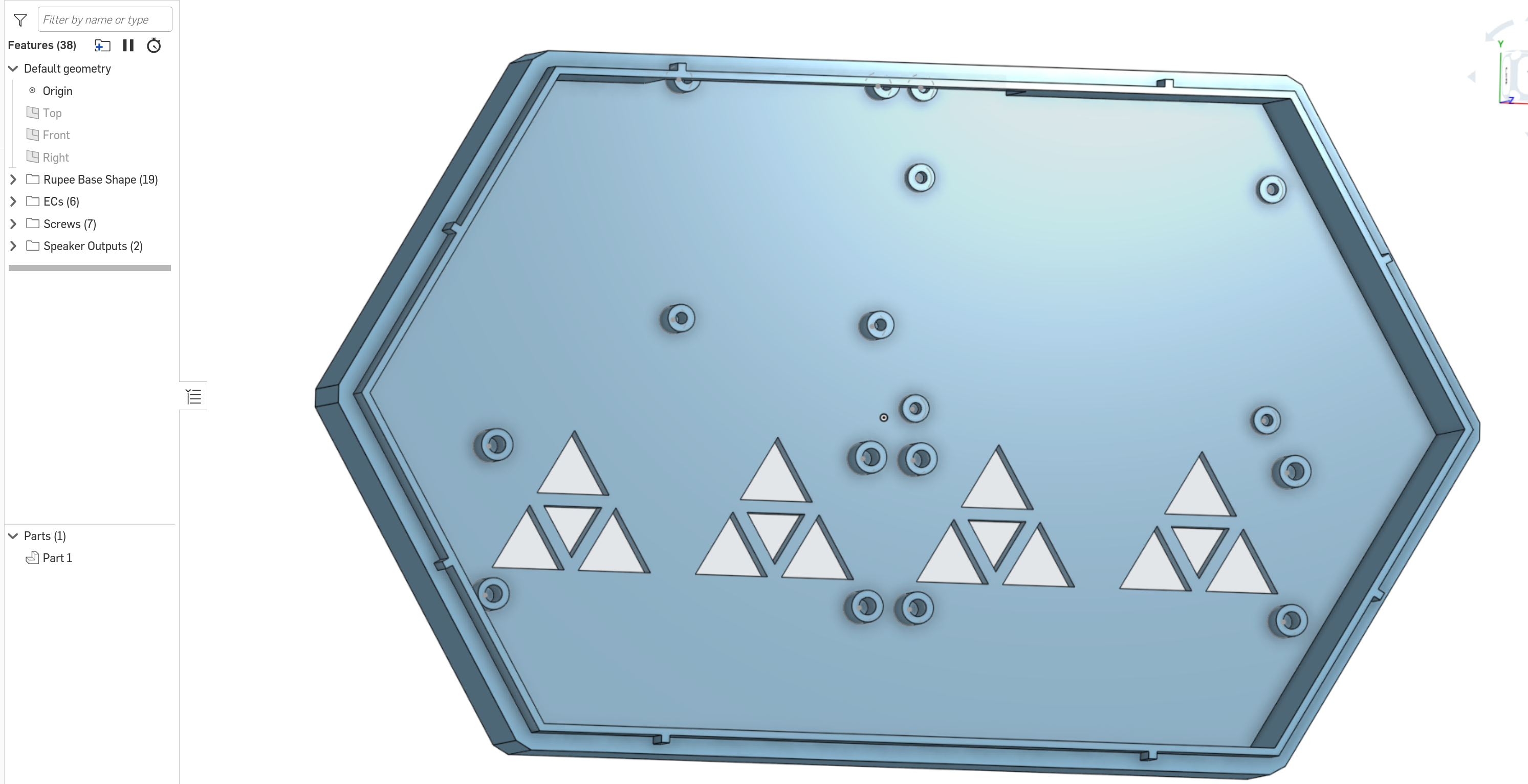
The enclosure is a custom Rupee-shaped design,
with Triforce vents and speaker grilles, that I modeled in Onshape and 3D printed. The two shells close
with a slip-lip joint alone, so no fasteners are needed to hold the enclosure together.
OcarinaOS
itself is a custom Yocto Project and Poky-based operating system built on core-image-base and minimized
for a fast boot time, with all of my project files packaged into their own meta-ocarina recipe and
started through sysvinit services. OS builds are automated end-to-end through a Jenkins pipeline that
compiles the Rust programs, updates the Yocto recipe, builds the image with BitBake, and flashes it to a
microSD card.
Check out the GitHub repo for the full bill of materials and build details.
RPBC, or Rose's Pitch Based Controller, is a dual-software suite where one can send their inputs from a handheld console into their laptop of choice. The data transmission is done in real time through stereo audio signals sent through the custom-made handheld C software into a second custom-made CLI Rust software, where it analyzes the pitch with a FFT with minimal data lag.
This Retinal Image Scan Classifier Project seeks to aid in the diagnosis of cataracts, diabetic retinopathy
and glaucoma through the use of machine learning - more specifically, this project contrasted three
different methodologies and their advantages when it comes to classification.
Three different
classifier models were created/implemented in order to analyze their efficiency and accuracy: a
nearest-neighbour model, a deep-convolutional neural network, and a pre-existing research-based model.
A
thorough analysis of the results can be seen in the following project poster and report. In addition, the
notebook itself can be found on the above GitHub repository.
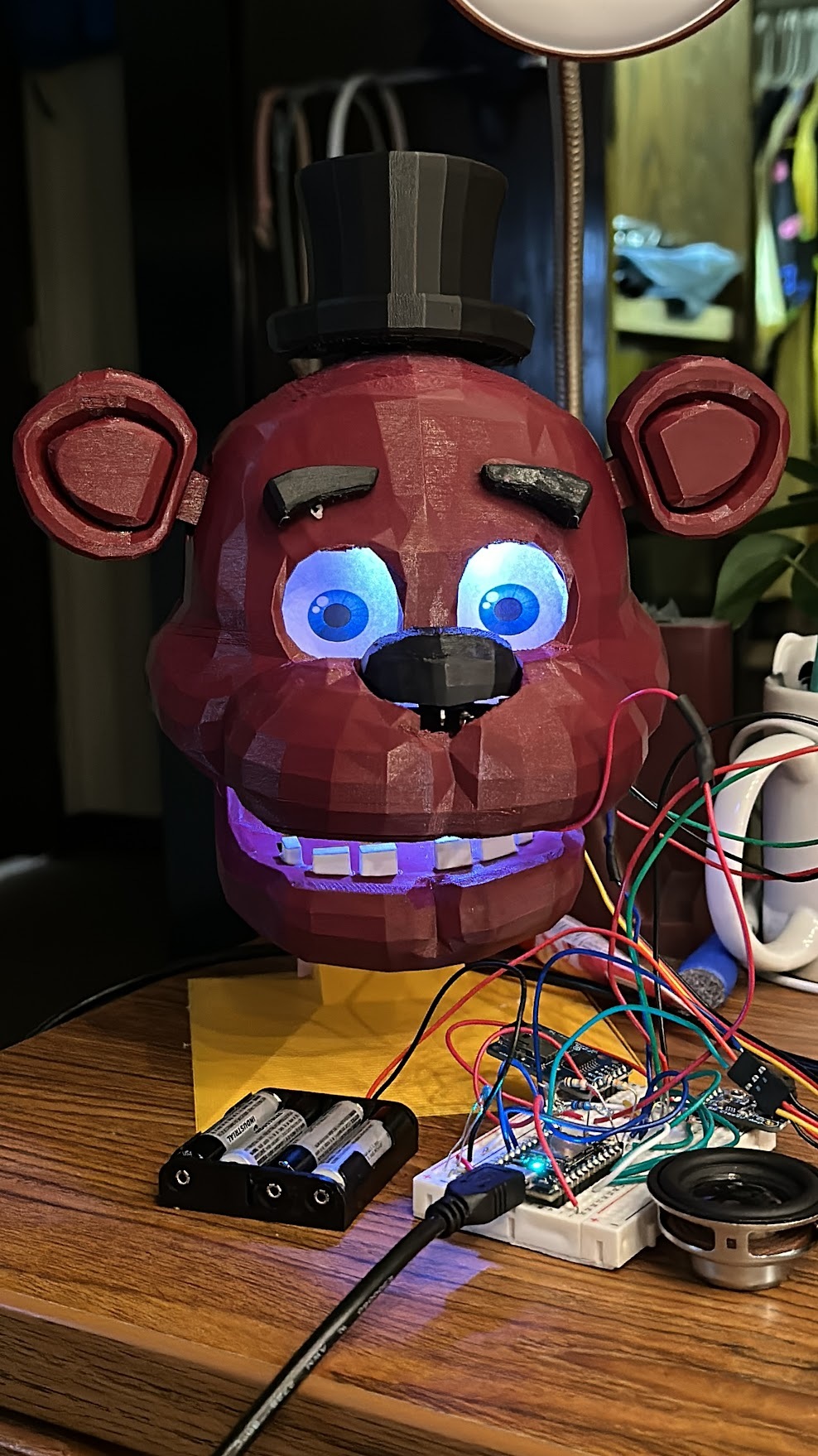
The Interactive Smart Themed Luminary is an Alexa-controlled luminary that's connected to a custom made skill in AWS, accessible via Node.JS interaction managed by its Particle Photon board. It also features colored LEDs, jaw movements based on audio levels!
Sidenote: the jumpscare seen on the left was designed to replicate the 1st game's!
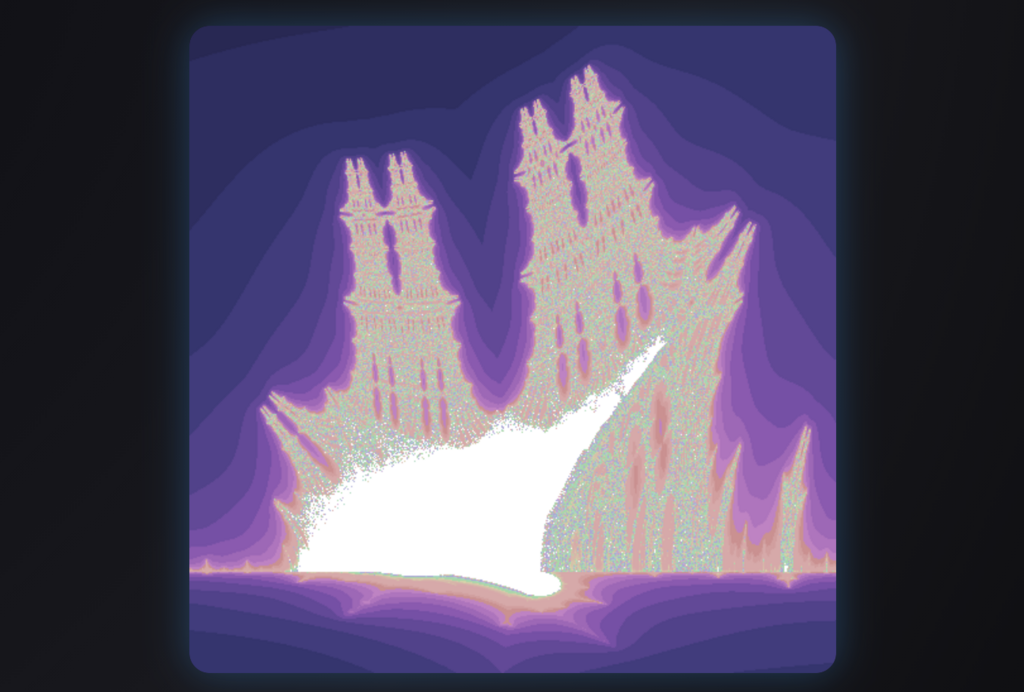
Fractum is a work-in-progress online GPU-accelerated fractal visualizer that includes dynamic iterations to optimize navigation, information about the slice of the complex plane that is currently being observed, laptop touchscreen support, and over 5 different fractals to observe!
This simple Reinforcement Learning Agent was trained to solve a simple test inspired by the game
Portal where the agent must pick up a cube, place it on the button to open the door, and cross it.
It was trained to search for the cube, pick it up, hold it until it arrived in the button, let it
go, and walk towards the door.
This environment and all its assets and logic were created
manually inside Unity & Blender when I was 15 years old. :)
DIMAAT/Astrotech was my High School pre-scientific research project. It sought to create a Virtual Reality experience based on Investigative Teaching concepts and competencies required by Brazilian college entrance exams and high school student accreditations to see if VR could be a helpful tool for teachers. It focused on the teaching of Astrobiology.
This is definitely my most technically involved project, as not only did it involve a lot of theoretical research and planning, but it required development in various different aspects. Some of the programs I wound up using were Unreal Engine, Blender, Metahuman Creator, Substance Painter, Substance Designer, and more. I was the sole programmer, artist, sound designer and voice actress for the software itself.
I was able to win around 20 awards throughout the project's lifetime, including 3rd place in Systems Software at the 2022 International Science and Engineering Fair!
For privacy's sake, I have ommited the full scientific article's name. If you're interested, reach out to me and I'd be glad to share more about it! The scientific paper has 110 pages, so there is a lot to share.
These are a collection of multiple, smaller projects that although I like sharing, felt didn't require or demand a dedicated section in and of themselves. If you're curious about them, check them out on my GitHub page!
This is a PCA-based KNN classifier that predicts if a given SMS message is a ham or a spam
message!
The model is generated using the 200 top features from the PCA of a TF-IDF
stemmed & vectorized collection of SMS messages, then saved separately to be used.
This is a page created to help facilitate access to multiple literary works created by Brazilian women throughout history! It uses jQuery and Jekyll for its resources.
This is a small CLI Python program that transforms any text input given to it into a sequence of
compatible keystrokes that, when used with MuseScore, type out notes in the sheet.
With
my friend and a very popular online review about a cube of raw tungsten, my program generated
the main melody, and he adjusted it and added chords and progressions and JOY into this
piece:
I really like pixel art and for something related to the project listed after this, I wanted a web-based dynamic background. Lo and behold, I made a little parallax city!
Created a software in which an avatar could change its position based on real-life head position. It uses a virtual 2D environment in SFML linked to a webcam + an OpenCV thread, a custom tablet application to control emotions, and a mic thread to control their intensity.
Currently a work-in-progress! The plan is to create a handheld consolue using a nRF52840 with a custom Zephyr RTOS firmware where you can play a fan-made Tetris and share scores via Bluetooth to your phone using a custom-made Expo + React Native application!